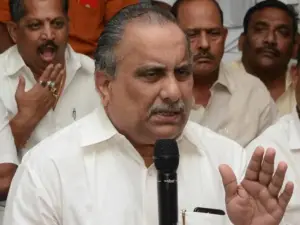
వైఎస్ జగన్, పవన్ కళ్యాణ్ ల మధ్య మాటల యుద్ధం | Pawan Kalyan Counter to YS Jagan | Mataku Mata

Share

Watch వైఎస్ జగన్, పవన్ కళ్యాణ్ ల మధ్య మాటల యుద్ధం | Pawan Kalyan Counter to YS Jagan | Mataku Mata


Recent Random Post:

SP Balasubrahmanyam: The Voice That Conquered Generations

June 5, 2026

Share


On December 16, 1966, a young and refreshing voice entered the world of Telugu film music with the song “Aaha Entha Vintha Moham.” That voice belonged to S. P. Balasubrahmanyam (SPB), who would later become one of the greatest playback singers in Indian cinema history.

At the time of SPB’s arrival, Telugu film music was dominated by the legendary Ghantasala Venkateswara Rao. His mesmerizing voice had become synonymous with Telugu cinema, and he enjoyed an unparalleled position in the industry. Singers like P. B. Srinivas were active, but Ghantasala remained the undisputed king. For actors, especially leading stars, getting Ghantasala to sing for them was considered a blessing. His voice had become so closely associated with N. T. Rama Rao in mythological films and Akkineni Nageswara Rao in social dramas that audiences often felt the actors themselves were singing on screen.

In such an environment, the arrival of a new singer was a bold challenge. Yet destiny had special plans for SPB. Within just two years of entering the industry, he got the opportunity to sing for NTR in Ekaveera. He later sang a duet in NTR’s production Kodalu Diddina Kapuram, gradually earning recognition. Following Ghantasala’s untimely demise in 1974, SPB increasingly became the primary playback voice for NTR. His ability to adapt to NTR’s style, especially in films like Eduruleni Manishi, helped him establish an unshakable position.

However, winning over Akkineni Nageswara Rao was not as easy. SPB first sang for ANR in the 1970 film Iddaru Ammayilu, but the veteran actor reportedly felt that the young singer’s voice sounded too soft for him. As a result, singer Ramakrishna, who closely resembled Ghantasala’s style, became the preferred choice for ANR’s films. Many music directors believed SPB’s voice did not suit Akkineni.

But SPB was not one to give up. He worked tirelessly to modify his singing style and bring it closer to ANR’s screen persona. His dedication paid off, and once he began singing regularly for Akkineni, the duo delivered several memorable hits. Their collaboration reached its peak with Premabhishekam, where SPB’s voice blended so perfectly with ANR’s performance that audiences felt the actor himself was singing. The film became a sensation, and SPB’s contribution played a significant role in its success.

SPB’s versatility extended far beyond these two legendary actors. He lent his voice to stars such as Krishna, Sobhan Babu, Krishnam Raju, and many others, delivering countless chartbusters. He later became the voice of the next generation as well, singing for Chiranjeevi, Balakrishna, Nagarjuna, Venkatesh, and numerous younger heroes.

What made SPB truly extraordinary was his remarkable ability to adapt. He could tailor his voice to suit any actor, creating the illusion that the star on screen was actually singing. Audiences believed it, filmmakers trusted it, and actors preferred it. That unique gift made him the most sought-after playback singer of his era.

Over a career spanning more than five decades, SPB recorded over 40,000 songs across multiple languages, earning him the title of “Gana Gandharva” (Celestial Singer). Though he is no longer physically among us, his timeless songs continue to resonate with millions. As long as his music lives on, S. P. Balasubrahmanyam will remain immortal in the hearts of music lovers.