









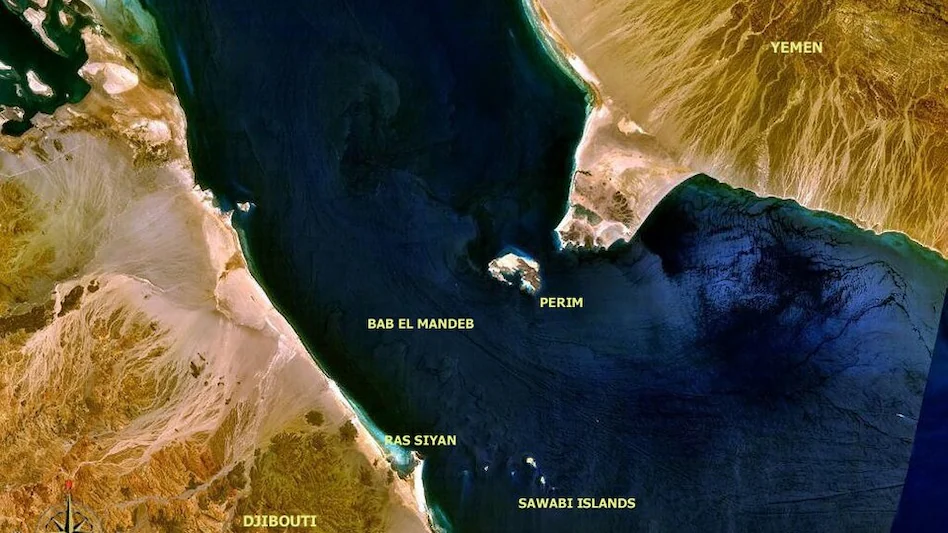
Fresh geopolitical tensions in the Middle East have raised concerns that Iran could expand pressure on global shipping by using its Houthi allies in Yemen to threaten the Bab el-Mandeb Strait, one of the world’s most important maritime trade routes. Such a move, if carried out, could significantly disrupt global energy supplies and intensify the ongoing regional conflict.
After demonstrating its ability to disrupt shipping through the Strait of Hormuz, reports suggest Iran is now signalling that the Bab el-Mandeb waterway—which connects the Red Sea to the Gulf of Aden—could also become a strategic pressure point. The route is vital for Saudi oil exports and a large share of international maritime trade.
The latest concerns emerged after a senior Yemeni official stated that the country’s armed forces were prepared to close the Bab el-Mandeb Strait if Saudi Arabia continued military operations in Yemen. According to Iranian media, Mohammed al-Farah, a senior member of the Houthi movement Ansarullah, warned that if tensions escalated further, both the Strait of Hormuz and Bab el-Mandeb could be disrupted simultaneously.
He claimed that such a scenario could send global crude oil prices soaring to $200 per barrel, creating a major shock for international energy markets.
Several geopolitical analysts believe Bab el-Mandeb represents one of Iran’s remaining strategic pressure points after Hormuz. Experts say Tehran may be signalling that it has the ability to threaten two of the world’s most critical maritime oil corridors at the same time, potentially transforming the conflict into a broader challenge to global trade and energy security.
The Bab el-Mandeb Strait has already been at the centre of international attention since late 2023, when the Iran-backed Houthi movement launched attacks on commercial vessels in the Red Sea, claiming solidarity with Palestinians during the Gaza conflict. Those attacks forced several major shipping companies to divert vessels around the southern tip of Africa, increasing transportation costs and disrupting global supply chains. The attacks also prompted military operations by the United States, the United Kingdom, and allied naval forces to protect commercial shipping.
Security experts caution that any attempt to close Bab el-Mandeb would likely represent a major escalation and could trigger a broader military response from the United States and its regional allies. Analysts believe Iran may only consider such a move if diplomatic options collapse and the conflict expands further.
Regional observers also note that the Houthis are unlikely to take such a significant step without direct support or approval from Tehran. At the same time, they warn that continued escalation by both sides increases the risk of a wider regional confrontation affecting international shipping, oil supplies, and the global economy.
With tensions rising across both the Strait of Hormuz and the Bab el-Mandeb Strait, experts say the international community faces growing pressure to pursue diplomatic efforts before the world’s two most important maritime energy corridors become the centre of a larger geopolitical conflict.
Recent Random Post: