








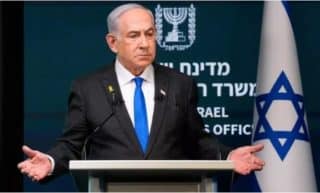
Benjamin Netanyahu, often referred to as “Bibi,” is a prominent Israeli politician currently serving as the Prime Minister of Israel, a position he has held since 2022. Born on October 21, 1949, in Tel Aviv, Netanyahu is a member of the Likud party and has had a long and tumultuous political career, marked by multiple terms as prime minister. His leadership style and policies have made him a polarizing figure in Israeli politics, often characterized by a strong stance on security and a commitment to maintaining Israel’s national interests.
Netanyahu’s early life was shaped by his family’s historical background; his father was a noted historian and Zionist activist. After spending part of his childhood in the United States, he returned to Israel in 1967 to serve in the Israel Defense Forces (IDF), where he became a captain in the elite Sayeret Matkal unit. His military service included participation in high-profile operations, such as the rescue of hostages from a hijacked airplane in 1972. Following his military career, Netanyahu pursued higher education at the Massachusetts Institute of Technology (MIT), earning degrees in architecture and business administration.
Politically, Netanyahu rose to prominence in the late 1980s when he was elected to the Knesset as a member of the Likud party. He became party leader in 1993 and won his first term as prime minister in 1996, making history as Israel’s youngest leader and the first to be born after the establishment of the state in 1948. His tenure has been marked by significant events, including signing agreements with the Palestinian Authority and overseeing military operations during periods of heightened conflict.
Despite his political successes, Netanyahu’s career has also been marred by controversy, particularly regarding ongoing corruption charges that include bribery and fraud. These allegations have led to significant political challenges, including multiple elections that resulted in deadlock within the Knesset. Nevertheless, Netanyahu’s resilience has allowed him to maintain influence within Israeli politics, and he continues to advocate for policies focused on national security and economic development. His leadership remains critical as Israel navigates complex regional dynamics and internal political strife.
Recent Random Post: