









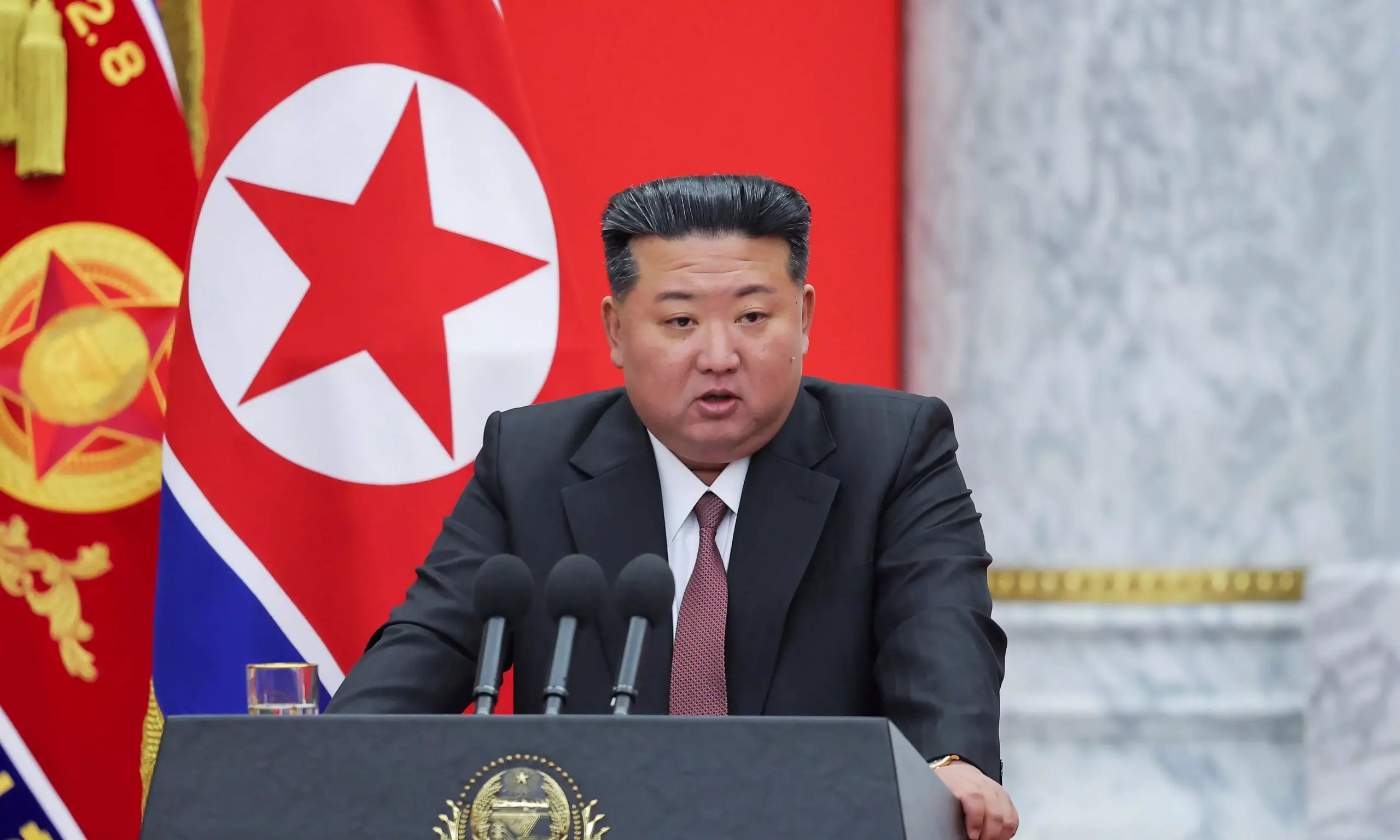
North Korea on Wednesday strongly criticised remarks made by a top US military official in South Korea, after he described the host nation as “the dagger in the heart of Asia.” Pyongyang said the comments reflected Washington’s broader strategy to contain China and expand its regional military influence.
The statement comes amid growing speculation that the United States may seek to further expand the role of US Forces Korea (USFK) in countering China’s influence in the Indo-Pacific region.
US Army Lieutenant General Xavier Brunson made the remarks during an interview, where he said, “When (the Chinese) look out from the east coast of China, what they see is Korea, the dagger in the heart of Asia.” He also described Japan as a “shield” acting as a backstop against China’s regional ambitions, according to a transcript released by the Strategic Studies Institute of the US Army War College.
About 28,500 US troops are currently stationed in South Korea to deter threats from nuclear-armed North Korea and to maintain regional stability.
Reacting to Brunson’s comments, North Korea’s state-run Korean Central News Agency (KCNA) published an analysis by Kim Myong Chol, who accused the United States of acting as “the chieftain of harassing peace and the world’s worst war empire.” He further claimed the remarks demonstrated Washington’s intention to use South Korea as a geopolitical tool to contain China.
Kim Myong Chol, based in Japan and often described as an unofficial overseas voice for Pyongyang, also emphasized China’s longstanding role as North Korea’s key diplomatic and economic supporter.
Meanwhile, South Korea’s presidential office said it was aware of the comments and has been maintaining communication with the United States at various levels regarding the issue. Local media reports also suggest Seoul has raised concerns over the remarks.
Beijing’s embassy in Seoul has already condemned the statement, calling it “hostile and provocative” and questioning whether it reflects the official position of Washington.
The exchange highlights rising geopolitical tensions in the region amid increasing strategic competition between the US and China.
Recent Random Post: