








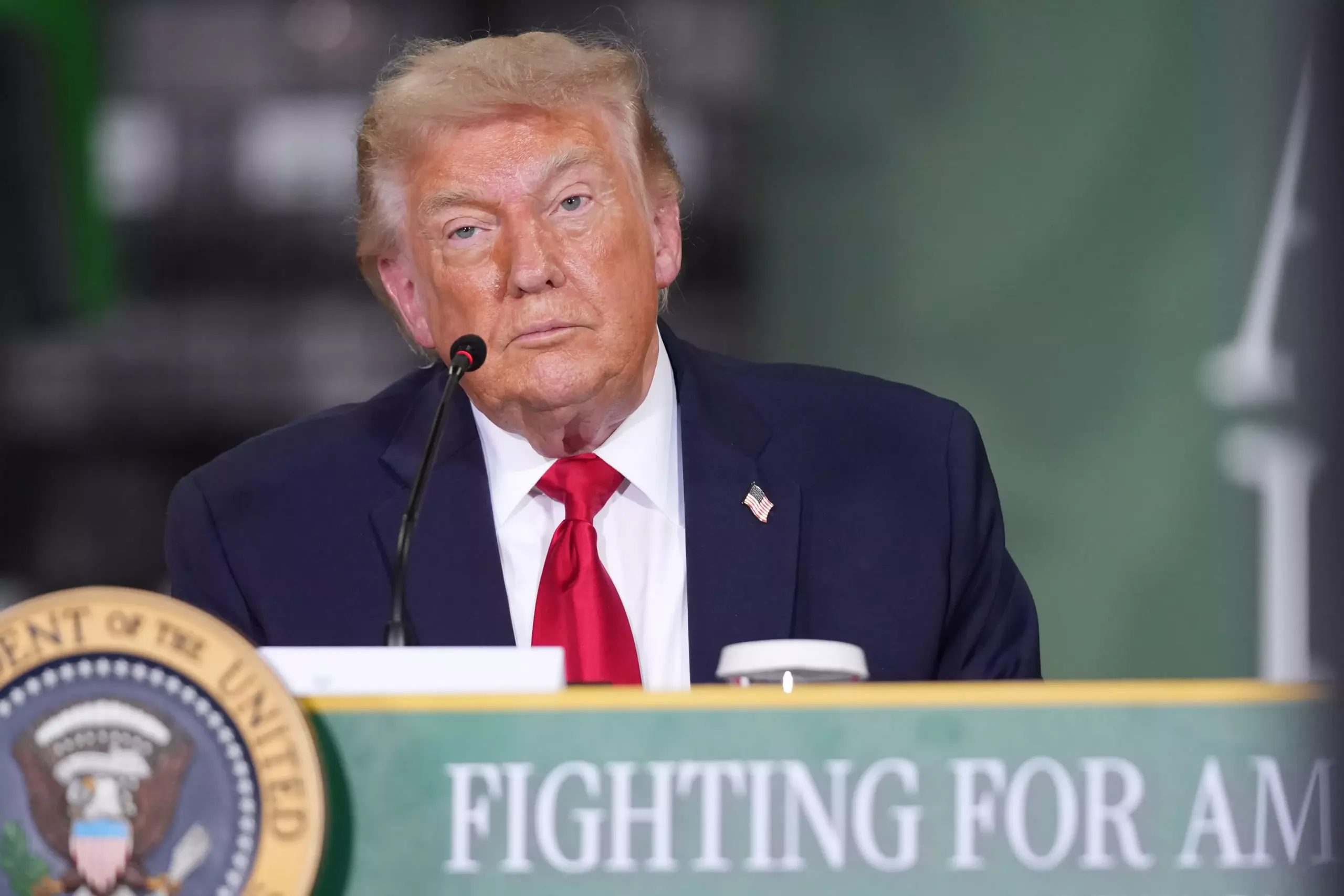
US President Donald Trump has claimed that Iran’s missile capabilities have been significantly weakened, stating that Tehran now retains only a fraction of its pre-conflict arsenal. In an interview with NBC News’ Meet the Press, Trump asserted that the United States had “totally destroyed” Iran’s military infrastructure and estimated that Iran currently holds only about 21–22% of its ballistic missile stockpile.
“I would say, percentage-wise, maybe 21, 22 per cent of their missiles,” Trump said, adding that while Iran still possesses a considerable number of missiles, its capability is far below earlier levels. However, his assessment contrasts with intelligence briefings reportedly shared with US lawmakers. According to a New York Times report, congressional updates suggest Iran has restored operational control over 30 of its 33 missile sites along the Strait of Hormuz and still retains roughly 70% of its pre-conflict missile inventory.
Trump also expressed optimism about easing tensions in the Strait of Hormuz, a critical global energy route. He claimed that naval escorts for commercial tankers in the region are continuing at scale and predicted that oil prices would eventually fall as stability returns.
The remarks come amid rising domestic political pressure in the United States over fuel prices ahead of upcoming midterm elections. Reiterating Washington’s long-standing position, Trump said Iran would not be allowed to develop nuclear weapons, insisting that diplomatic and military pressure had yielded “great success.”
Meanwhile, regional tensions continue to escalate. Lebanese President Joseph Aoun criticized Iran’s influence in Lebanon, urging the Iran-backed Hezbollah group to abandon armed confrontation and embrace political dialogue. In an interview with CNN, Aoun accused Tehran of interfering in Lebanese affairs and said the country’s future must be decided by its own institutions.
Aoun also called for negotiations as the only viable path toward peace, stressing that continued conflict would only deepen instability. His remarks followed renewed violence in southern Lebanon, where Israeli airstrikes and ground operations have intensified tensions involving Hezbollah.
Adding to the volatility, US Central Command reported that American forces shot down four Iranian drones heading toward the Strait of Hormuz and subsequently struck Iranian coastal radar sites in response. The military said the strikes were intended to protect maritime traffic and deter further attacks in the region.
The US also boarded a sanctioned oil tanker linked to Iran in the Indian Ocean and imposed fresh sanctions targeting Iran’s energy sector, signaling continued pressure on Tehran’s economic lifelines.
Despite the escalating situation, Trump maintained that diplomatic progress remains possible, telling reporters that developments with Iran are “going quite well” and expressing confidence that a resolution will eventually be reached.
However, negotiations remain fragile. While a tentative 60-day ceasefire extension had been discussed between US and Iranian representatives, disagreements over conditions have stalled progress. Iranian officials have not publicly committed to the proposed framework.
As tensions persist across the Strait of Hormuz and Lebanon, the broader regional conflict remains unresolved, with global energy security and geopolitical stability increasingly at stake.
Recent Random Post: