









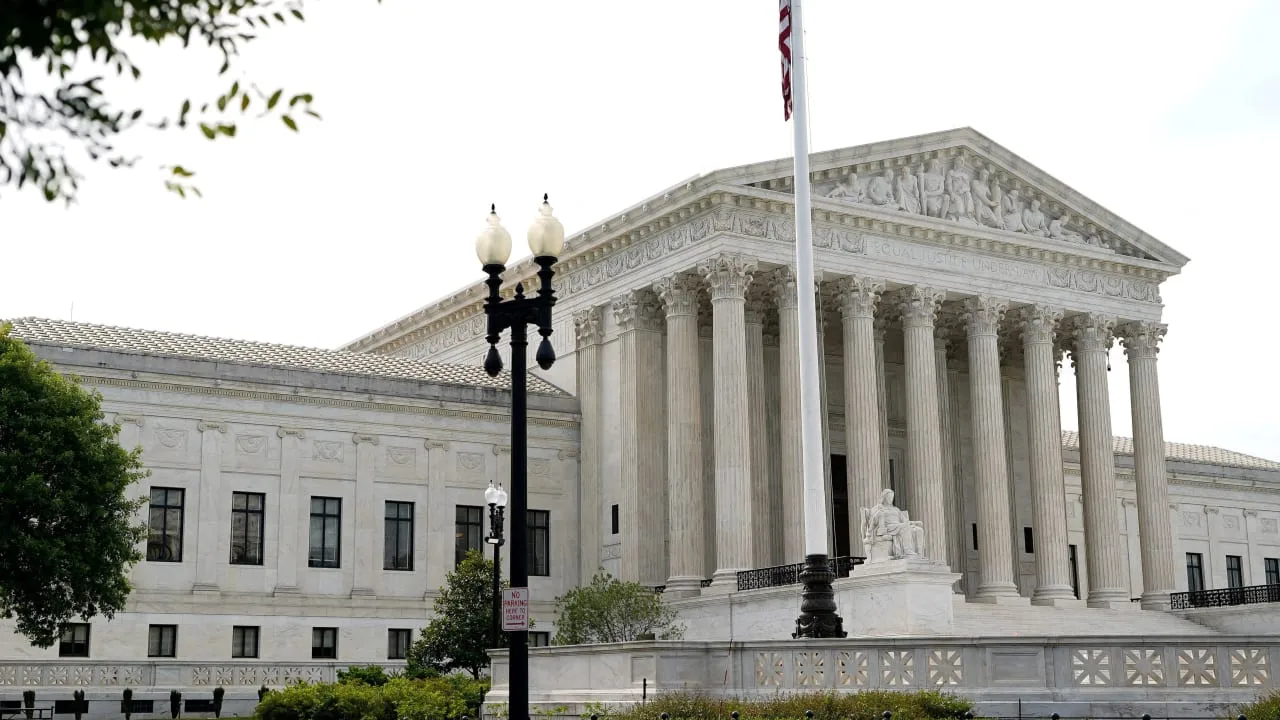
In a significant victory for President Donald Trump’s immigration agenda, the US Supreme Court has ruled that the federal government can limit how many asylum seekers are processed each day at official border crossings along the US-Mexico border.
The 6-3 decision, delivered on June 25, strengthens the administration’s authority to regulate the flow of asylum applicants by allowing officials to restrict access when border facilities lack the capacity to process everyone immediately.
At the center of the case was a key legal question: Does a migrant waiting at an official port of entry already count as having “arrived” in the United States and therefore have an immediate right to seek asylum?
The court’s conservative majority answered no. The ruling states that federal immigration law does not require authorities to process every asylum seeker the moment they reach a border crossing. Instead, officials may manage admissions based on available staffing, space, and operational capacity.
The decision effectively restores the legal basis for the controversial “metering” policy, first introduced during Trump’s first term. Under the system, only a limited number of asylum applications are accepted each day, while others must wait—often on the Mexican side of the border—until processing slots become available.
Supporters argue that metering is a practical solution to overcrowded border facilities and limited government resources. Immigration officials have long maintained that ports of entry cannot process unlimited numbers of asylum seekers simultaneously.
Critics, however, say the policy creates prolonged waiting periods that expose migrants to unsafe living conditions in border cities. During its previous implementation, many asylum seekers spent weeks or even months in temporary shelters or makeshift camps while waiting for an opportunity to file their claims. Human rights organizations argued that the policy discouraged asylum applications without formally denying legal access.
The Biden administration ended the metering policy in 2021, stating that it conflicted with the United States’ humanitarian commitments toward people fleeing persecution and violence.
While the Supreme Court’s ruling does not automatically reinstate metering, it removes a major legal hurdle should the Trump administration decide to implement the policy again.
The sharply divided verdict also reflects the broader political and legal battle over immigration in the United States. With several other immigration-related cases still pending before the courts, the latest ruling is expected to play a significant role in shaping future border policy, though it is unlikely to be the final chapter in the ongoing debate.
Recent Random Post: