








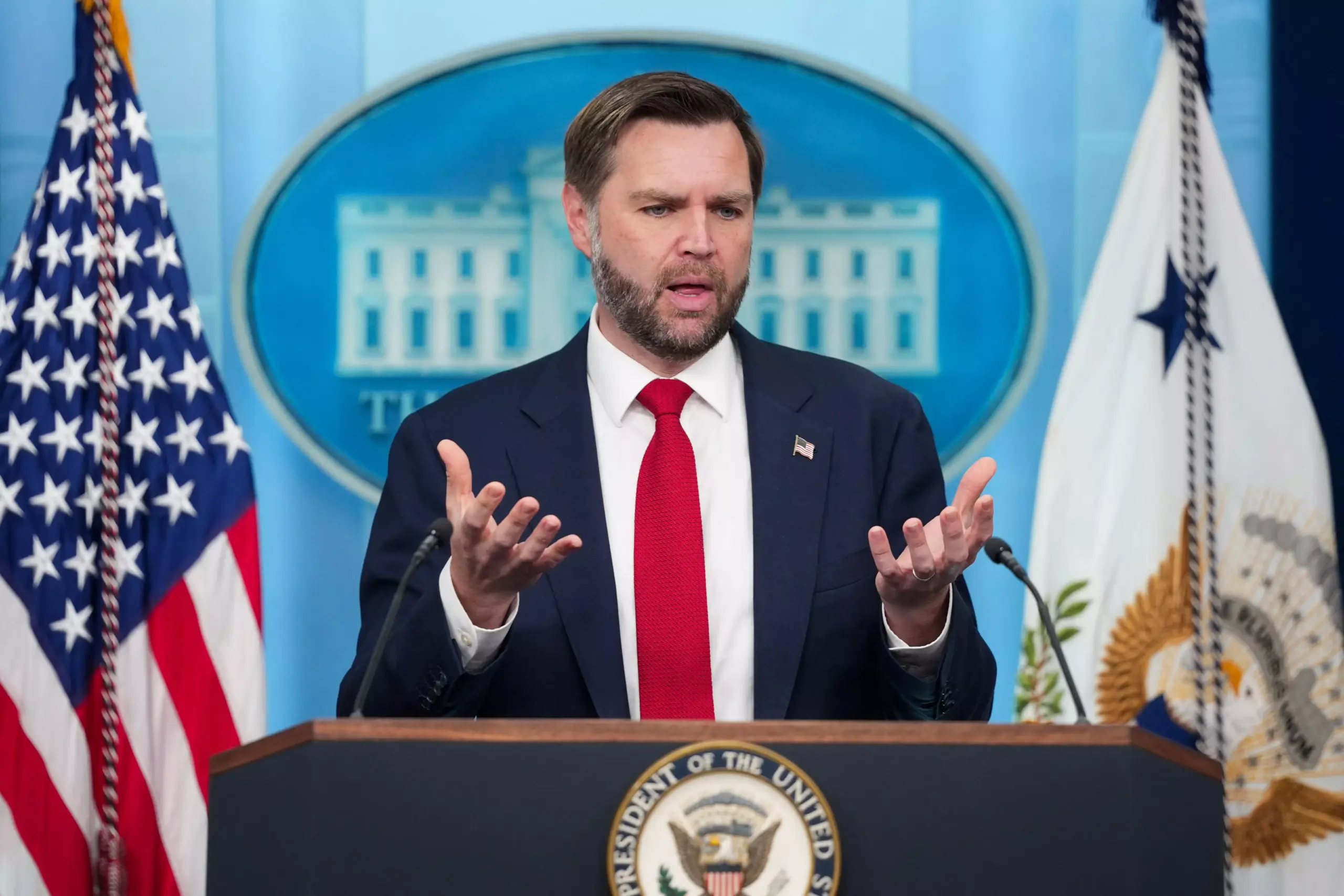
US Vice President JD Vance has postponed a scheduled trip to Switzerland, where talks were expected to take place on Friday regarding the next steps in the US–Iran agreement aimed at ending the conflict in the Middle East, according to the White House.
A spokesperson said the decision was due to ongoing logistical uncertainties surrounding the negotiations, adding that while the visit is delayed, the US remains committed to beginning technical-level talks as soon as possible.
The agreement, signed earlier this week by US President Donald Trump and Iranian President Masoud Pezeshkian, outlines a 60-day framework for broader discussions on key issues, including Iran’s nuclear programme and regional tensions. However, uncertainty continues over the immediate next phase, with no confirmation of face-to-face talks in Switzerland.
In Iran, Supreme Leader Ayatollah Mojtaba Khamenei reportedly approved the deal despite expressing reservations, stating that the decision was made in the interest of protecting national priorities. Iranian officials have maintained that future negotiations do not indicate acceptance of external pressure.
Iran’s chief negotiator, Mohammad Bagher Ghalibaf, also cautioned against any violation of the agreement, warning of a strong response if terms are breached.
Meanwhile, developments in the region showed signs of easing tensions. The US military reportedly lifted a naval blockade of Iranian ports, although American warships remain deployed in nearby waters. Maritime activity in the Strait of Hormuz continues to be closely monitored, with limited shipping movement reported.
The agreement also includes provisions related to sanctions relief and economic reconstruction once a final settlement on Iran’s nuclear programme is reached. However, political reactions remain divided, with some officials in the US and Iran expressing skepticism about the durability of the deal.
While supporters of the agreement have described it as a diplomatic breakthrough, critics on both sides argue that long-term stability remains uncertain, with concerns that tensions could resurface after the initial 60-day negotiation window.
Recent Random Post: