








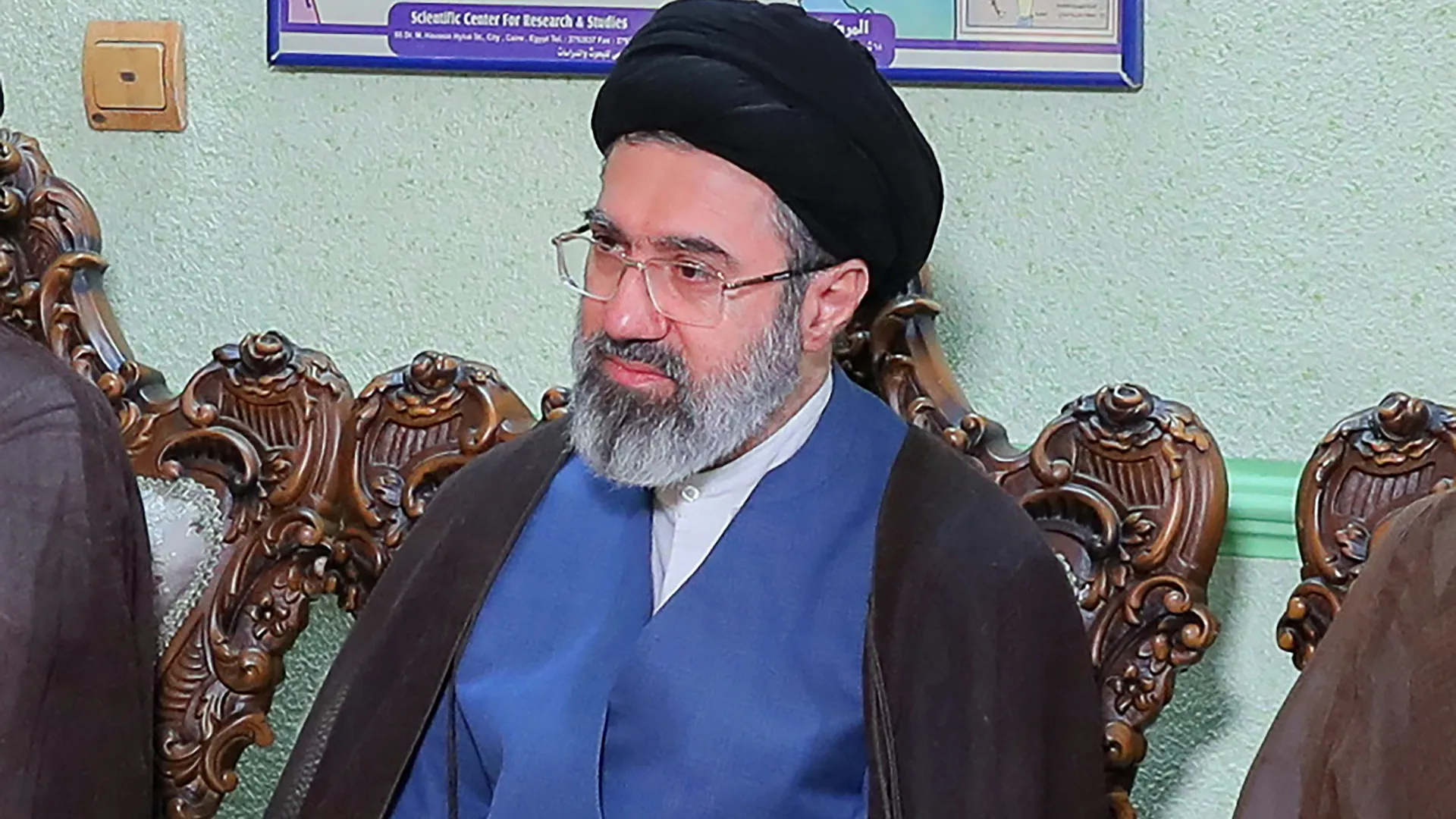
Iran is preparing for a major condolence ceremony on Saturday following the death of its longtime Supreme Leader Ayatollah Ali Khamenei, who was reportedly killed in military strikes on February 28. According to Iran’s semi-official Tasnim News Agency, the ceremony will be led by his son and successor, Mojtaba Khamenei, fueling intense global speculation over whether he will make his first public appearance since assuming the country’s highest position.
The event has drawn widespread international attention, as Mojtaba Khamenei has remained completely absent from public view since the outbreak of the conflict. No official photographs, videos, or audio recordings of him have been released, adding to uncertainty surrounding Iran’s leadership transition. A clerical council reportedly appointed Mojtaba as the new Supreme Leader in early March, one week after the death of his father.
However, questions continue to surround his health and ability to assume public duties. Reports from senior sources in Tehran suggest Mojtaba suffered serious injuries during the same military strike that killed Ayatollah Khamenei, including severe facial trauma and injuries to his limbs. While he is said to be recovering, officials reportedly believe his condition has not improved sufficiently for regular public appearances. Iranian security agencies are also believed to be restricting his movements due to concerns over potential future military threats.
According to Tasnim, the condolence ceremony will take place after the Maghrib and Isha prayers at the Imam Khomeini portico within the Hazrat Masumeh shrine in the holy city of Qom. The gathering follows the completion of Ayatollah Khamenei’s funeral ceremonies, with state media reporting that he was buried at the Shrine of Imam Reza in Mashhad after several days of nationwide mourning and large funeral processions across Iran and Iraq.
The ceremony comes amid renewed tensions between Iran and the United States despite a recently declared truce in the months-long conflict. Iranian authorities have used the funeral events to project national unity and reinforce the ideological strength of the Islamic Republic during a sensitive period of political transition.
Funeral processions in Mashhad witnessed massive crowds, with participants chanting anti-American slogans and directing strong criticism toward US President Donald Trump. State-run media reported that Ayatollah Khamenei and four members of his family, who were also killed in the attack, were laid to rest together.
The leadership transition marks a historic moment for Iran, bringing an end to nearly four decades of Ayatollah Khamenei’s rule. Since assuming office in 1989 following the Islamic Revolution, he consolidated significant political, military, and economic authority within the office of the Supreme Leader. His death comes after months of domestic unrest, with widespread protests driven by economic hardship and international sanctions, which were met with an extensive security crackdown by Iranian authorities earlier this year.
Recent Random Post: