









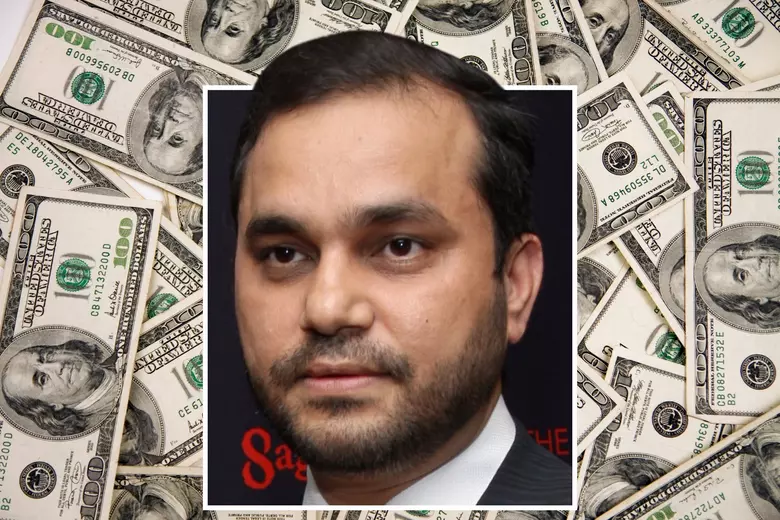
Parmjit Parmar, also known as Paul Parmar, the Indian-origin businessman once famous for flaunting his luxurious lifestyle during the 2008 global financial crisis, has now been sentenced to five years in prison in a massive securities fraud case.
Parmar pleaded guilty to conspiracy charges linked to securities fraud involving inflated company revenues, fake bank records, fabricated customer data, and misleading investors connected to a publicly traded healthcare services company where he served as CEO. According to court documents, the fraud involved more than $212 million.
During the late 2000s, Parmar attracted widespread media attention for his extravagant lifestyle. His massive 39,000-square-foot mansion in New Jersey frequently made headlines for its luxury features. Reports at the time claimed the estate included an underground tunnel connecting the main residence to a separate entertainment complex.
The lavish property reportedly featured an indoor swimming pool, bowling alley, private theatre, wine cellar, gym, luxury bar, and even a saltwater pool surrounded by imported sand. At the peak of the 2008 recession, Parmar famously claimed he was “recession-proof” and continued spending heavily on luxury items while the global economy struggled. He reportedly spoke about buying a BMW worth $110,000 for his girlfriend and a Bentley for himself.
However, his fortunes dramatically collapsed within a few years. By 2011, the luxury mansion had entered foreclosure proceedings with debts reportedly reaching nearly $26.3 million, most of it owed to Deutsche Bank.
Parmar had earlier stated in interviews that he moved from India to the United States at the age of 19 and built his business empire independently without family financial support. He founded Pegasus Consulting Group at the age of 25 before expanding into multiple business ventures.
According to prosecutors, Parmar’s legal troubles stemmed from his involvement in a complex financial fraud scheme linked to a healthcare company listed on the London Stock Exchange’s Alternative Investment Market. Between 2015 and 2017, Parmar and his associates, including Sotirios Zaharis, also known as Sam Zaharis, and Ravi Chivukula, allegedly orchestrated an elaborate conspiracy to mislead investors and financial institutions.
Court records state that the accused created fake customer lists, manipulated financial statements, and submitted falsified documents to artificially inflate the company’s valuation. Prosecutors alleged that these fraudulent activities convinced investors and lenders that the company was worth far more than its actual value.
To finance the deal, a private investment firm reportedly invested around $82.5 million, while another consortium of financial institutions contributed nearly $130 million, taking the total funding involved in the fraud to approximately $212.5 million.
The case has now become another high-profile example of how aggressive financial manipulation and corporate fraud can eventually lead to dramatic downfalls, even for businessmen once seen as symbols of luxury and success.
Recent Random Post: