








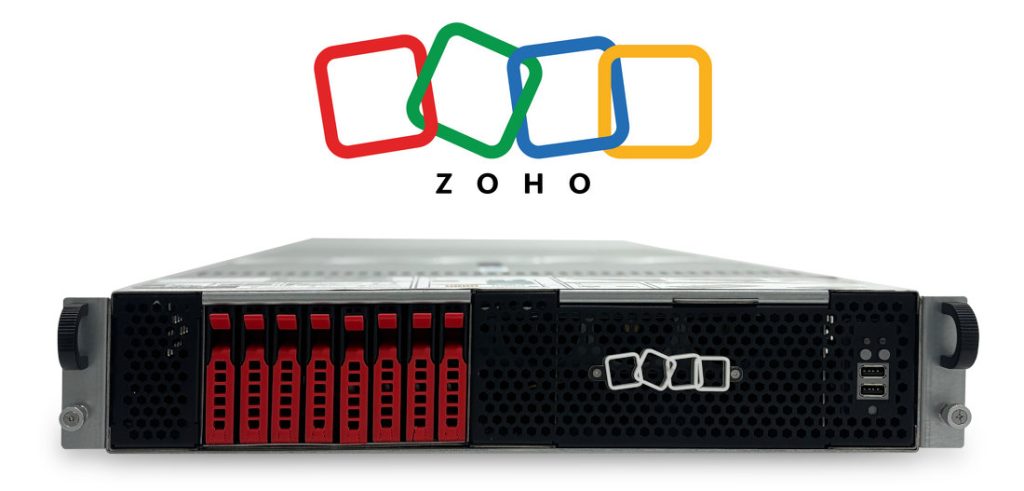
Zoho Corporation, the parent company of ManageEngine and Zoho, has unveiled Nathu La, a server platform designed in India that represents a major step in the company’s ambition to control its entire technology ecosystem—from hardware and data centres to software applications and artificial intelligence models.
Developed over five years by Zoho’s engineering team in Nagpur, the server is designed to deliver performance comparable to existing enterprise-grade systems while consuming 12–18% less power and reducing total cost of ownership by 20–30%. Built on Intel’s Xeon 6 processors, Nathu La was developed in collaboration with Intel and is already being deployed across Zoho’s internal infrastructure.
The launch comes at a time when India’s digital infrastructure is expanding rapidly, yet much of the country’s server hardware continues to be sourced from international vendors. Zoho believes Nathu La is an important step toward technological self-reliance by enabling greater control over the design, firmware, and engineering layers of its infrastructure.
Although core components such as Intel processors are imported, Zoho has developed the server architecture, firmware, systems management software, power delivery systems, and workload-specific optimizations in-house. Company executives say the real value lies in building expertise around the hardware rather than simply assembling imported components.
Zoho CEO Shailesh Davey described the project as a significant milestone in the company’s vision of creating sovereign technology powered by Indian talent. He highlighted that the server was developed by engineers working from smaller cities and towns, demonstrating India’s growing capability in advanced technology development.
The Nathu La platform has been optimized for virtualization, high-performance computing, AI inference, and storage workloads. Zoho says key modular components, including the Data Centre Secure Control Module (DC-SCM) and Network Interface Card (NIC), were designed internally and assembled through Indian electronics manufacturing partners. The company has also filed multiple patents related to thermal management and cost-efficient server architecture.
Unlike traditional hardware manufacturers, Zoho is not planning to sell Nathu La as a standalone commercial product. Instead, the company is using the platform within its own ecosystem and has already deployed nearly 1,000 servers across its Indian data centres. With 20 data centres operating globally, Zoho intends to gradually expand the server’s deployment across additional workloads while continuing to use select OEM hardware where required.
The project is closely tied to Zoho’s broader artificial intelligence strategy. By running AI workloads on its own hardware, software, and data centres, the company aims to lower inference costs and improve efficiency. Executives believe this integrated approach will become increasingly important as AI computing expenses continue to rise.
Nathu La will also support Zoho’s growing AI ecosystem, including its in-house large language model, ZLLM, which is already integrated across several company products. Zoho is currently working on more advanced AI models with 32-billion and 100-billion parameters, further strengthening its AI ambitions.
The server was developed from Zoho’s Nagpur campus and received support from SETU (Student’s Engagement for Transformative Upskilling), the company’s skill-development initiative focused on Electronics System Design and Manufacturing. The program has trained hundreds of engineering students across Central India, with several participants contributing directly to the Nathu La project.
Looking ahead, Zoho sees potential opportunities beyond internal deployments. Company executives have indicated that a future possibility could involve offering enterprise and government customers server solutions preloaded with Zoho software, although no formal timeline has been announced.
With Nathu La, Zoho has taken a significant step toward building an end-to-end technology stack under its own control, reinforcing India’s growing capabilities in advanced hardware engineering and AI infrastructure.
Recent Random Post: