









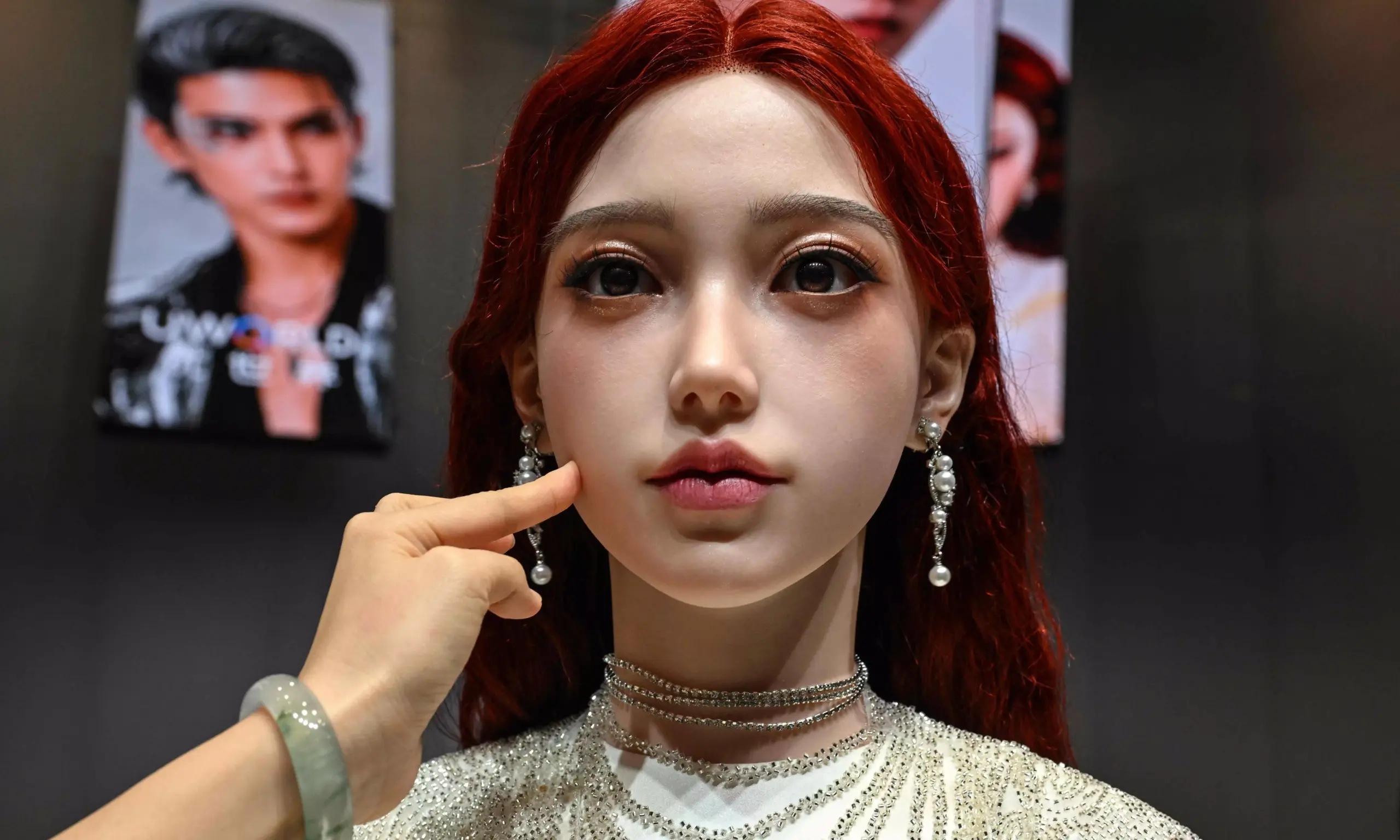
Chinese robotics company UBTech has unveiled what it describes as the world’s first mass-produced, ultra-realistic humanoid companion robot, designed to provide emotional support and AI-powered companionship.
Named U1, the life-sized robot features a metallic frame covered with lifelike synthetic skin and is equipped with cameras, microphones, and sensors that enable it to interact naturally with users. Powered by artificial intelligence, the robot can hold conversations, offer emotional support, remind users to take medication, and learn individual preferences over time.
Speaking at the launch event in Shenzhen, UBTech’s UWorld brand head Michael Tam described the robot as a lifelong companion.
“Our bionic robots can accompany you for a lifetime. They will always be loyal to you and provide unconditional companionship,” he said.
The U1 is available in multiple variants, with prices starting at 119,800 yuan (around $17,600) for the standard model and reaching 990,000 yuan (about $145,700) for the premium “Ultra” version. Buyers can also customize the robot’s appearance, including its face, hairstyle, and clothing, allowing it to resemble a loved one, a celebrity, or a fictional character.
According to UBTech, the primary target audience includes single individuals and senior citizens, two rapidly growing demographics in China that often seek companionship. The company claims it has already received more than 13,300 pre-orders, with deliveries expected to begin in September.
While the U1 is designed to provide companionship, conversation, and wellness support, it is not intended to perform household chores such as cooking or cleaning. The company also clarified that the robot is not designed for intimate relationships.
Beyond casual conversations, the robot can monitor a user’s well-being, detect signs of fatigue or stress, remind them about medications, and even suggest shared activities like watching a sporting event.
Companion robots are gaining attention globally as countries explore AI-based solutions to address loneliness, particularly among aging populations. Similar technologies include AI-powered companion dolls used in South Korean care homes and ElliQ, an AI assistant designed to support older adults.
Industry experts, however, believe the market will remain relatively niche. Analysts point out that highly realistic humanoid robots must overcome the so-called “uncanny valley” effect, where machines that appear almost human can make people feel uncomfortable rather than reassured.
The rapid advancement of AI companions has also raised concerns over privacy, emotional dependence, and responsible AI use. UBTech says all user data processed by the U1 is encrypted and will not be used to train its AI models.
China continues to dominate the humanoid robotics sector, with the government identifying robotics as a strategic industry. According to industry estimates, the country accounted for around 85 percent of global humanoid robot installations last year, while more than 140 Chinese companies have introduced over 330 humanoid robot models.
Although AI-powered humanoid robots are becoming increasingly sophisticated, experts note that many of their most impressive demonstrations still rely on pre-programmed routines or remote operation, suggesting that fully autonomous everyday use remains a work in progress.
Recent Random Post: