









It is extremely rare for a country’s prime minister to directly intervene in a factory labour dispute. However, South Korea recently witnessed such a situation when nearly 48,000 workers at Samsung Electronics prepared for a massive 18-day strike over bonus-related disagreements.
As tensions escalated, South Korean Prime Minister Kim Min-seok reportedly warned that the government could invoke emergency mediation powers if the strike threatened the national economy. The situation raised serious concerns globally because Samsung remains the world’s largest memory chipmaker, and even a temporary disruption in its semiconductor facilities could impact the global electronics supply chain.
The crisis was eventually resolved after Samsung agreed to allocate 10.5 percent of its semiconductor operating profit toward special worker bonuses. However, the episode once again highlighted a critical reality about semiconductor manufacturing — chip fabrication plants, commonly known as fabs, cannot simply stop and restart like ordinary factories.
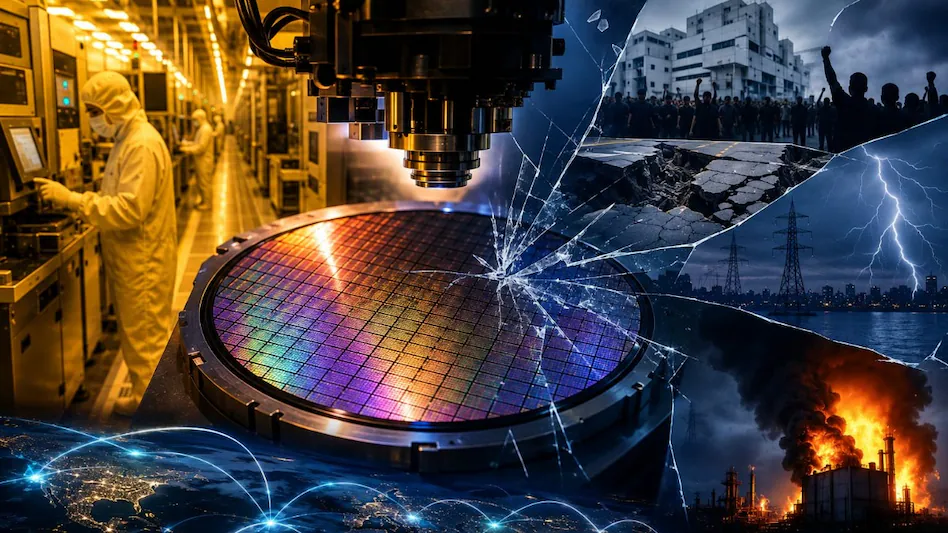
Industry experts explained that semiconductor fabs operate in highly controlled environments where silicon wafers move through hundreds or even thousands of extremely precise manufacturing stages over several weeks or months. Even a short interruption caused by labour unrest, power failures, contamination, or natural disasters can permanently damage wafers and trigger long recovery periods.
According to semiconductor analysts, even a one-day labour action at Samsung earlier this year reportedly caused foundry output to drop by 58 percent, while memory fabrication declined by 18 percent during the affected shift. Although semiconductor plants are heavily automated, human involvement still plays a crucial role in monitoring quality checks, supervising operations, and ensuring production continuity.
Experts also pointed out that restarting semiconductor plants after disruptions is an extremely complex and expensive process. Recovery timelines depend heavily on the type of disruption and the technology node involved. Older-generation fabs may recover within weeks, while advanced facilities producing cutting-edge chips could require several weeks or even months to fully return to normal operations.
Past incidents across the semiconductor industry demonstrate how fragile the ecosystem can be. In 2021, Japanese chipmaker Renesas Electronics reportedly needed more than three months to recover from a factory fire. The same year, Samsung’s semiconductor facility in Austin, Texas, remained shut for nearly a month following severe winter storms and power grid failures.
Similarly, contamination issues at Taiwan Semiconductor Manufacturing Company in 2019 reportedly reduced quarterly revenue by hundreds of millions of dollars. These examples underline how disruptions in semiconductor production can impact not only manufacturers but also global supply chains, product launches, and consumer electronics markets worldwide.
The discussion has become especially relevant for India as the country prepares to strengthen its semiconductor manufacturing ambitions through projects such as Tata Electronics’ upcoming semiconductor facility in Dholera, Gujarat. Industry experts believe India must focus not only on infrastructure and investment but also on building a skilled workforce, stable labour relations, resilient supply chains, and strong disaster recovery systems.
Analysts say semiconductor manufacturing is unlike any other industry because operational discipline, precision, and uninterrupted workflows are essential for survival. The recent Samsung labour dispute may have ended without major damage, but it has offered the world a clear reminder of how sensitive and strategically important chip manufacturing has become in today’s technology-driven economy.
Recent Random Post: