








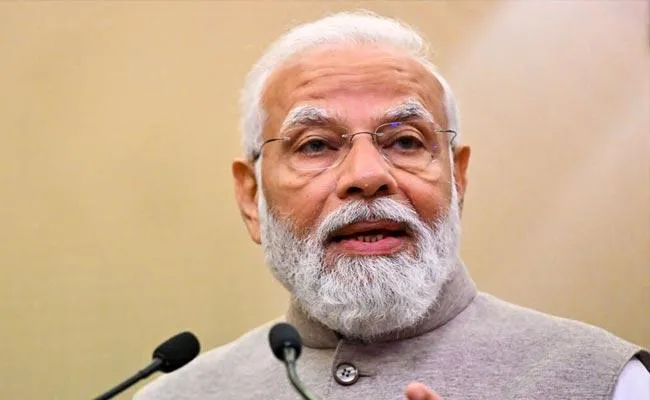
Prime Minister Narendra Modi rose to prominence as one of India’s most influential leaders by focusing on long-standing issues that successive governments had struggled to address for decades.
Under his leadership, India witnessed large-scale transformation across infrastructure and governance. The expansion of digital services, the rise of online payments, improved road networks, better access to hospitals, toilets, LPG connections, rural electrification, banking inclusion, and direct welfare delivery brought millions of citizens into the formal system. For many, governance became more visible and accessible than ever before.
India’s national highway network expanded significantly, airport infrastructure more than doubled, metro rail systems extended across multiple cities, and major urban projects such as coastal roads and bridges reshaped connectivity. Welfare schemes were digitized, subsidies were transferred directly into bank accounts, and food security programs supported millions of households.
This phase of governance was largely driven by execution, implementation, and large-scale delivery, building a strong physical and administrative foundation for the country.
However, India’s next phase of growth presents a very different set of challenges. The focus is now shifting from infrastructure-led development to technology-driven transformation, including artificial intelligence, semiconductor manufacturing, advanced digital ecosystems, intellectual property creation, and deep-tech innovation. Global economic leadership is increasingly defined not by physical infrastructure alone but by technological dominance.
At the same time, concerns are emerging about India’s relatively low research and development spending compared to major economies, and its heavy reliance on the services sector rather than innovation-led manufacturing. As automation and AI reshape global industries, questions are being raised about the future of traditional IT services and high-value job creation in India.
While India continues to grow, some analysts point out pressures such as currency fluctuations, inflation concerns, stock market volatility, and shifting global investor sentiment. These factors, combined with rising unemployment concerns and political opposition narratives, are contributing to a more complex domestic environment.
Despite these challenges, Modi’s earlier phase of governance is widely seen as foundational, focused on building systems and infrastructure at scale. The current debate now centers on whether India can successfully transition into a technology-first economy.
The coming decade will be crucial in determining whether India emerges as a global technology powerhouse or remains largely dependent on innovations developed elsewhere.
Recent Random Post: