









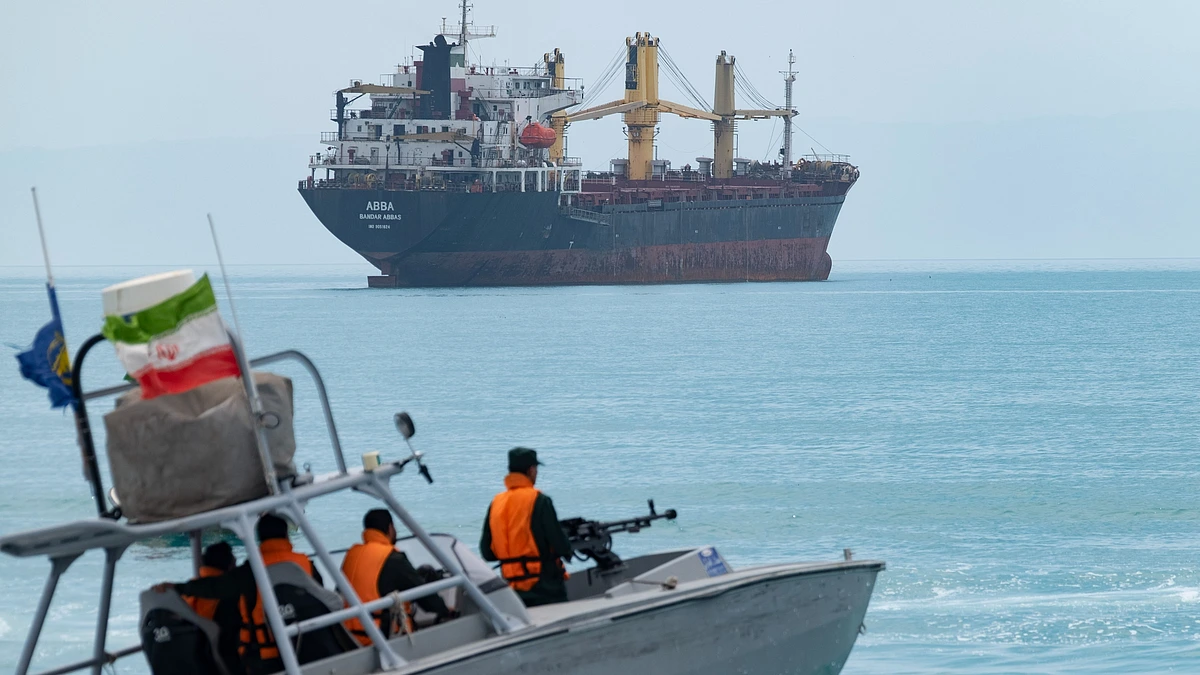
Even amid heightened tensions and disruptions in the region, as many as 13 Indian-flagged vessels have successfully reached their destinations through the Strait of Hormuz, according to reports.
A detailed investigation highlights how Indian ships continue to navigate the strategically sensitive waterway with coordinated support between India, Iranian authorities, and maritime agencies.
According to an exclusive report by Reuters, Indian-flagged vessels are permitted to pass through the Strait of Hormuz only after a structured clearance process overseen by Iran. Ship movements are reportedly coordinated between New Delhi, Iranian naval authorities, and the Islamic Revolutionary Guard Corps (IRGC).
India is said to use its embassy in Tehran to communicate with Iranian authorities, including the navy and IRGC, which vet vessels before granting passage approval. Once clearance is received, captains are provided designated sea routes and guided through the region under Iranian naval supervision.
In some cases, ship transponders are switched off and satellite communication is restricted during transit, as part of security protocols. After Iranian approval, the Indian Navy is also reported to directly contact shipmasters to provide navigation waypoints and ensure safe passage.
A shipping industry source told Reuters that Indian vessels are instructed to comply with all directions, including stopping if required by Iranian authorities and proceeding only when cleared.
The arrangement forms part of a broader mechanism developed by Iran to regulate traffic through the Strait of Hormuz, one of the world’s most critical oil transit routes. Reports suggest that vessel movement is closely monitored, with detailed screening conducted by Iranian security agencies, including the IRGC.
Countries seeking passage reportedly must submit formal requests through diplomatic channels to Iran’s foreign ministry, which are then reviewed by higher security bodies. The process includes verification of ship ownership, cargo details, crew information, and destination.
Reuters also reported that nearly 1,500 vessels carrying thousands of sailors were previously stranded in the Gulf amid tensions, highlighting the scale of disruption in the region.
The Strait of Hormuz remains a vital global energy corridor, with a significant share of oil and gas shipments passing through it. Any disruption in this passage is seen as a major risk to global energy stability.
While international maritime law generally prohibits restrictions on free passage through strategic straits, reports indicate that security arrangements, vetting procedures, and coordination mechanisms have become increasingly complex due to geopolitical tensions.
The evolving situation continues to draw attention from global energy markets and maritime stakeholders as shipping routes remain tightly controlled and closely monitored in the region.
Recent Random Post: