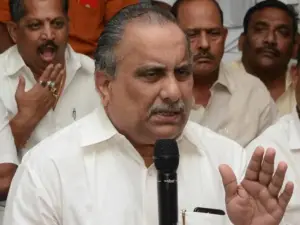










A political controversy erupted earlier this week after comments made by political analyst K Nageshwar Rao regarding Pawan Kalyan and Amit Shah went viral across social media platforms.
During a discussion, Nageshwar Rao claimed that Pawan Kalyan had allegedly met Amit Shah in an attempt to pressure the Centre into arresting Y. S. Jagan Mohan Reddy. The statement was quickly amplified by sections of the YSR Congress Party’s social media ecosystem, with many projecting it as proof that NDA leaders were politically worried about Jagan’s growing influence.
The narrative soon triggered a sharp response from Janasena leaders. Senior leaders, including Nadendla Manohar, strongly objected to the remarks and demanded an immediate clarification from the analyst.
Following the backlash, K Nageshwar Rao later appeared on a live television debate and withdrew his comments unconditionally. He admitted that the information shared by him was based on incorrect inputs and acknowledged that he should have verified the claims before making them public.
“I am unconditionally taking back my words. I was misinformed by my source, and I should have cross-checked the information earlier,” Rao stated during the debate, clarifying that there was no truth to the earlier speculation.
The episode has once again highlighted how quickly political narratives spread in today’s digital ecosystem, especially in highly sensitive political environments like Andhra Pradesh politics. Statements made by influential analysts often carry significant weight among viewers, making fact verification increasingly important before presenting speculative claims as political insight.
The incident also sparked broader discussions about credibility in political commentary, with many observers pointing out that public trust can be affected when high-profile analysts later retract widely circulated statements.
Recent Random Post: